VNSNY Hospice Liaison Nurses: Providing Vital Connections at the End of Life
As the name suggests, VNSNY’s hospice liaisons are true connectors—and never has that role been more important than today, when New York City’s hospitals are overwhelmed by patients in the final stages of COVID-19. These courageous, compassionate hospice liaisons, all of whom are nurses, are finding ways to connect families to their loved ones in hospital ICUs, even though quarantine and social distancing protocols prevent face-to-face visits. At the same time, the nurse liaisons are also connecting these patients with the palliative care they need to live their final hours comfortably, free of symptoms such as pain and distressed breathing.
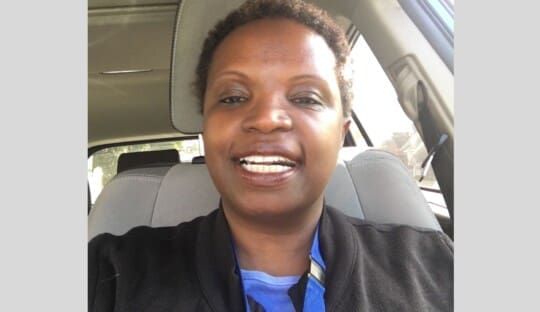
 “There’s never been a greater need for hospice services,” says Diane Lynch, a VNSNY hospice liaison who is working out of a makeshift trailer behind busy NYU Langone Hospital–Brooklyn. “Every little step we take to give comfort, reduce symptoms, and give families emotional support is so important. It’s what we do… it’s what we have to do.”
When hospital patients receive a terminal diagnosis, VNSNY Hospice’s nurse liaisons work to transition them to hospice care. This usually involves moving them back home for their final days, if that’s what the family desires. Because COVID-19 patients deteriorate rapidly during the end stages of the illness, however, their hospice care is now more likely to be delivered inside the hospital, where hospice liaisons strive to establish whatever connections they can between patients and their families.
“These times are emotionally trying, because of the absence of patients’ loved ones,” says Diane, who has been a hospice nurse for 14 years. “We hospice nurses are the ones at the bedside, holding the patient’s hand, or getting family members on the phone to say their goodbyes. It’s so powerful, hearing these tearful, beautiful messages of love from relatives who can’t be where they want to be, which is at their loved one’s bedside.”
Diane adds, “To be present when someone leaves this earth is a privilege. It’s equally a privilege to be present when family members are expressing their love for this person, even if it is over FaceTime. I’ve witnessed a lot of sad moments, but also a lot of beautiful moments.”
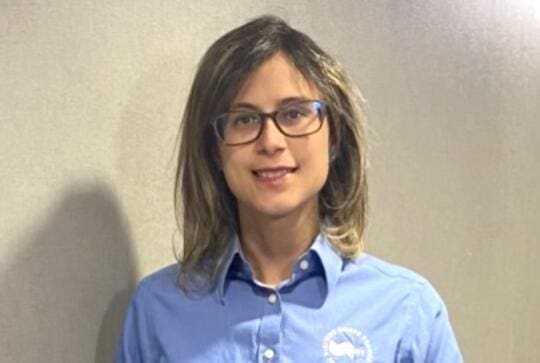
 “We are in a new phase of remote death, where sometimes the best we have is an iPad to say goodbye to a mother or a spouse of, say, 40 years,” notes Kathleen Jaeger, a VNSNY hospice liaison at NYU Langone Health’s Tisch Hospital in Manhattan. “That presents its own emotional challenge for families.” With more than 20 years of experience guiding people at the end of life, says Kathleen, “I try to be that flashlight in an otherwise dark wood, to show them the path of what they can expect.”
Kathleen recently had the now-rare opportunity to help a man in his 80s visit his wife “of forever” as she took her final breaths, getting him a wheelchair and full PPE, and preparing him as best she could for the brief visit. “He was overwhelmed at the time,” Kathleen says. “But my experience tells me that it is going to be extremely meaningful to him, as he processes his grief, to have had that moment. We want to get that in the bank for him as he begins to moves through life without her.”
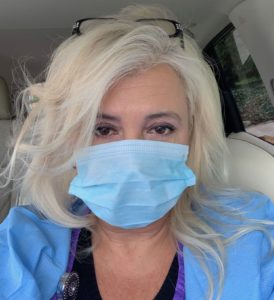 At Staten Island’s Richmond University Medical Center, VNSNY hospice liaison Alisa Giambalvo worked hard to help a husband get home to his wife of 52 years for his final breaths. “I explained to her that he might die in ambulance or just a few minutes after getting home,” Alisa recalls. “She just wanted to be with him at the end. They had made a pact to always be there for each other.” Alisa arranged the transfer and sent a crisis care nurse to educate the wife. Thanks to her efforts, the couple was together at the time of death. “In the end, she said to me, ‘God bless you. You’re an angel.’”
As part of their work, Hospice liaisons return calls from the family at all hours, even—or especially—when loved ones cannot get through to a busy nursing station. “It brings comfort to their families to know that the nurse is actually going into the room and seeing the patient,” says Alisa. “Even from home, I can log on and get them updates. It makes life a little easier for them during this very sad time.”
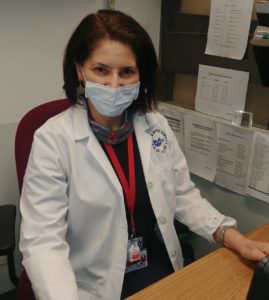 The heartfelt connection that hospice liaisons forge can be as simple as blowing a kiss, which VNSNY’s Maria Leite did at the request of a daughter whose mother was isolated without visitors in her final hours. “We’re not going to change the outcome for families and patients, but we can let them know they’re not alone,” says Maria, who also works at Tisch Hospital. “We are traveling on this journey with them, and that’s the comfort that we can provide.”
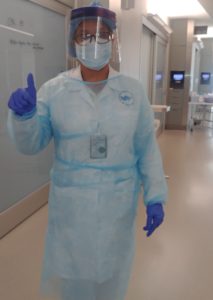 Michelle Drayton, Director of Hospice and Palliative Outreach, praises VNSNY’s hospice liaisons as heroes, adding that they exemplify VNSNY’s dedication to delivering care to those in profound need. “The toll of this pandemic is enormous,” Michelle says. “What our hospice liaisons on the front lines are able to deliver to the sickest patients of all ages, who are actively dying, is really inspiring.”
Because the current pandemic demands that all hands be on deck at inundated hospitals, physicians called in to treat patients dying of COVID-19 may have little or no experience providing palliative care. VNSNY’s hospice nurses play a vital role here, consulting with physicians to help them deliver the right measure of comfort care. Diane notes that she consults with physicians on medications and dosages, and will also let them know if she observes a patient to be in distress, serving as “another set of eyes, ears and hands” for hospice patients.
“What we want for these patients is what we want for all people in hospice,” says Diane. “And that’s to have a good death, with the dignity and comfort they deserve.”
To read more VNSNY Heroes of 2020 stories, click here.