
Representative John Lewis—A Civil Rights Giant and a Tireless Advocate of Quality Home Health Care for All
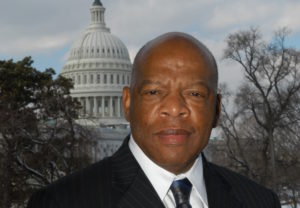 Representative John Lewis of Georgia, one of the giants of the civil rights movement, died last Friday at age 80. Lewis, who served more than 30 years in Congress, was the last surviving speaker from the 1963 March on Washington and one of the leaders of the 1965 march for voting rights in Selma, Alabama, in which Lewis and countless other peaceful protesters were attacked by state troopers.
Lewis was best known for his civil rights work—both before and after his election to Congress in 1986—but he was also a leader in the fight for access to health care in America. “John Lewis was a major supporter of the Affordable Care Act—better known as Obamacare—and he steadfastly supported policies that addressed health disparities,” says Dan Lowenstein, VNSNY’s Vice President of Government Affairs. “That includes during the COVID-19 health emergency, where he sought to address the underlying flaws in our health system that led to communities of color being ravaged at disproportionate and completely unacceptable rates.”
In Lewis’s words, his goal was to make health care “a right and not a privilege,” and home and hospice care were always an important part of that agenda. “Congressman Lewis never faltered in his support for home care and hospice,” says William A. Dombi, president of the National Association for Home Care & Hospice in Washington, D.C. “Most recently, he was there for us as Medicare sought to reform the home health services payment model. He was also among those in Congress who saw the value of telehealth in the home. I could give a thousand other instances where he was a stalwart and passionate advocate for the right to receive high-quality care at home.”
Lewis was “an early adopter” on home care issues, including hospice care, Dombi notes, and he went on to co-sponsor numerous pieces of home care-related legislation in his decades as a U.S. Representative. In his early years in Congress, Lewis focused on reforming Medicare’s claim review practices that led to widespread wrongful denials across the country. Later, he fought against payment policies that resulted in drastic cuts in spending and the number of home care beneficiaries.
Dombi also recalls how Lewis spent 13 years, starting in 2007, pushing to allow Medicare payment for home health services ordered by nurse practitioners, clinical nurse specialists, certified nurse-midwifes and physicians’ assistants. That change finally came about as part of the CARES Act, the stimulus package enacted in response to COVID-19, that Congress passed and the president signed into law in March of this year.
Lewis’s health care mission reflected VNSNY’s own mission of caring for the vulnerable, adds Dan Lowenstein. “While VNSNY mourns the loss of a great American leader,” he says, “we’re grateful for his lifetime of dedication to the cause of social, racial, and health justice. He will be missed.”


